Immediately preceeding two deep, reflective eulogies – one for his mother Delia the other for his wife Andree, Kenneth Rexroth placed the poem, “It Rolls On” when he published The Phoenix and the Tortoise. (1944).
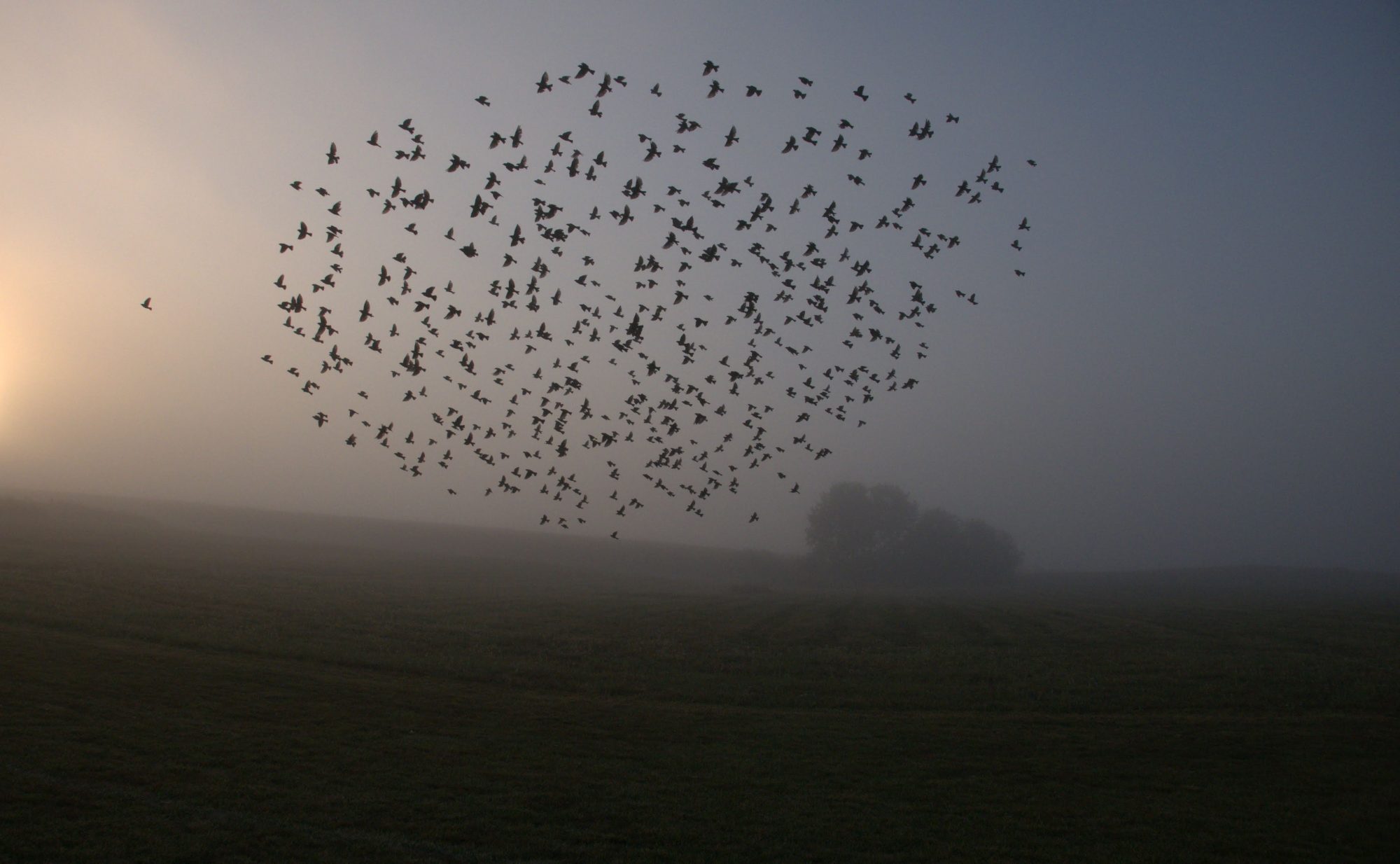
The opening line reminds me of a Basho haiku, (Falling ill on a journey, my mind runs round a withered field), the second line of Yeats, The Wild Swans at Coole. The poem’s tone and sense of wearing travel and fatiguing restlessness contrasts so tightly with the warblers in their lives.
Time passes. Who else documents it as well as Rexroth? Read his work from the 1940s and 1950s as he looks backward with an awareness that informs a lifetime. Andree Rexroth Delia Rexroth
IT ROLLS ON
Irresolute, pausing on a doubtful journey;
Once more, after so long, the unique autumnal
Wonder of the upper Hudson about me;
I walk in the long forgotten
Familiar garden. The house was never
Reoccupied, the windows are broken,
The walls and the arbors ruinous,
The flower beds are thickets,
The hedges are shattered,
The quince and hawthorns broken and dying.
One by one the memory of twenty years
Vanish and there is no trace of them.
I have been restless in many places
Since I rested in this place.
The dry thickets are full of migrating
Green-grey warblers. Since last fall
They have visted Guatemala and Labradour
And now they are bound south again.
Their remote ancestors were doing the same thing
When I was here before. Each generation
Has stopped for an autumn evening
Here, in this place, each year.
Kenneth Rexroth (The Complete Poems of Kenneth Rexroth, page 218)
 east of the fog