New Year — 2022

Rain through the night and deep puddles on the walk with the dogs before six a.m. NYD seems to be the true holiday as only two cars out and no lights on in houses. As always a siren out on the highway as we passed that way but, again, few trucks or cars.

Reminded a bit of the second of Rexroth’s new year poems.

Fifty

Rainy slkies, misty mountains,
The old year ended in storms.
The new year starts the same way.
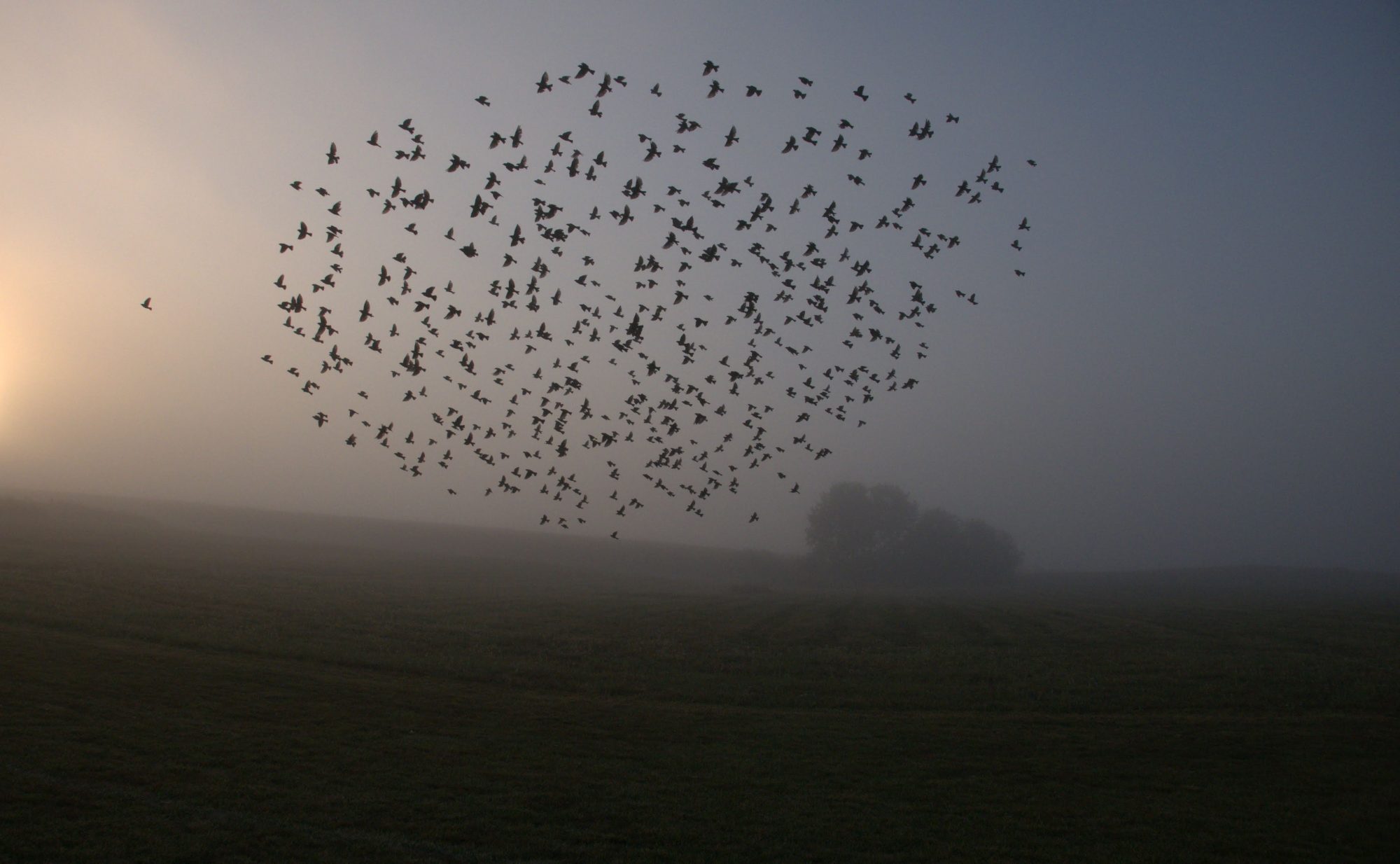
All day, from far out at sea,
Long winged birds soared in the
Rushing sky. Midnight breaks with
Driving clouds and plunging moon,
Rare vasts of endless stars.
My fiftieth year has come.

Years earlier, Rexroth wrote,

The New Year

for Helen

I walk on the cold mountain above the city
Through the black eucalyptus plantation.
Only a few of the million lights
Penetrate the leaves and the dripping fog.
I remember the wintery stars
In the bare branches of the maples,
In the branches of the chestnuts that are gone.

Eiseley – We Are The Scriveners

We Are The Scriveners

Reading Loren Eiseley recently after a twenty year break and still moved by this poem. Eiseley, an anthropologist, crafted essays and built poems that informed us of his particular views of the world. I think he and Aldo Leopold recovered the American essay for our ecological concerns. More about Eiseley at Eiseley

I have not seen her in forty years.
She is old now, or lies in one of those midwestern
farm cemeteries where
no one remembers for long, because everyone
leaves for the cities. She was young, with freckles
and a wide generous mouth, a good girl to have
loved for a lifetime but the world
always chooses otherwise, or we ourselves
in blindness. I would not remember so clearly save that here
by a prairie slough sprinkled with the leaves of autumn
the drying mud on the shore shows the imprint
of southbound birds. I am too old to travel,
but I suddenly realize how a man in Sumer
half the world and millennia away
saw the same imprint and thought
there is a way of saying upon clay, fire-hardened,
there is a way of saying
“loneliness”
a way of saying
“where are you?” across the centuries
a way of saying
“forgive me”
a way of saying
“We were young. I remember, and this, this clay
imprinted with the feet of birds
will reach you somewhere
somehow
if it take eternity to answer.”
There were men
like this in Sumer, or who wept among the
autumn papyrus leaves in Egypt.
We are the scriveners who with pain
outlasted our bodies.

— Loren Eiseley —
from Another Kind of Autumn

Easter

Thinking about poems off and on during Easter visits and basketball games. Housman, of course, with the trees ‘wearing white for eastertide’ and Brecht’s Frühling 1938 where he and his son protect the apricot tree with the 3rd Reich in the background. And Easter 1916 wherein Yeats’ wrote:

I have met them at close of day
Coming with vivid faces
From counter or desk among grey
Eighteenth-century houses.
I have passed with a nod of the head
Or polite meaningless words,
Or have lingered awhile and said
Polite meaningless words,
And thought before I had done
Of a mocking tale or a gibe
To please a companion
Around the fire at the club,
Being certain that they and I
But lived where motley is worn:
All changed, changed utterly:
A terrible beauty is born.

but, today, I recall the poem Edward Thomas wrote – Memoriam, Easter 1915

The flowers left thick at nightfall in the wood
This Eastertide call into mind the men,
Now far from home, who, with their sweethearts, should
Have gathered them and will do never again.

And, if I remember correctly, Thomas died in a shell blast, or perhaps by a gunshot, on Easter Monday 1916 at the battle of Arras. He ws widely memorialized, Frost wrote in the poem, For E.T.

I slumbered with your poems on my breast
Spread open as I dropped them half-read through
Like dove wings on a figure on a tomb
To see, if in a dream they brought of you,

I might not have the chance I missed in life
Through some delay, and call you to your face
First soldier, and then poet, and then both,
Who died a soldier-poet of your race.

I meant, you meant, that nothing should remain
Unsaid between us, brother, and this remained—
And one thing more that was not then to say:
The Victory for what it lost and gained.

You went to meet the shell’s embrace of fire
On Vimy Ridge; and when you fell that day
The war seemed over more for you than me,
But now for me than you—the other way.

How over, though, for even me who knew
The foe thrust back unsafe beyond the Rhine,
If I was not to speak of it to you
And see you pleased once more with words of mine?
the tagline

The tag line for this blog comes from a Chinese poem by Ts’en Shen called the Fisherman written sometime in the 8th centry CE. The poem in a translation by C.H. Wang reads:

The boatman of Tsang-lang is quite old,
But his heart is as clean as flowing water.
He never talks about where he lives,
And nobody knows exactly what his name is.
At dawn he cooks on the riverbank;
Nightfalls, he glides into the rushes and sleeps.
He sings, too, one song after another,
And he holds in hand a bamboo pole:
The line at the end of the fishing pole
Is more than ten feet long.
He row and rows, following where the river goes,
And he doesn’t have a permanent abode.
How can anyone in the world imagine
What the old man really thinks?
The old man looks for what he himself thinks fit
And he never cares about the fish.

I read this poem as a young man and dog-eared the page in the book, and re-read it in Sunflower Splendor many times over the years. Now, in my late-60s moving closer to retirement, I read it with a sense of the insistent cataloging of active old age the poet observes. Ts’en Shen – that poet who spent his life as an official but recognized the value of standing aside, of observing, of being busy with other matters – wishes what he might have been, I think.